Get protected should you suffer an injury behind the wheel
Compare quotes from a wide range of providers
Get a quote today to give you peace of mind
Enter registration no. (optional):
Personal accident cover is a key part of protecting yourself and your family on the road in the UK. Often included in fully comprehensive car insurance policies, this cover provides financial support if you suffer serious injuries, permanent disability, or death following a car accident. For drivers with third-party or fire and theft policies, personal accident cover can usually be added as an optional extra to give greater peace of mind. In this guide, we’ll explain what personal accident cover is, how it works, and why it’s an important addition to your car insurance policy.
Personal accident insurance pays out a lump sum or regular payments if you or your family suffer serious injury or death due to an accident. This can include both accidental permanent injury insurance and accidental death insurance. The personal accident insurance cover can help you cover medical expenses, lost earnings, and other business expenses if you're unable to work due to an injury.
Most fully comprehensive car insurance policies include personal accident insurance (also referred to as personal injury cover), while third-party policies tend not to. Similar cover is also associated with life insurance policies.
If you're unable to work due to an injury, the claim will help cover your business expenses, allowing you to focus on your recovery without the stress of financial issues.
If you're involved in a car accident and suffer from a serious injury as a result that impacts your ability to work and keep up with yours and/or your family's day-to-day expenses, personal accident insurance can provide important peace of mind.
Making sure you have the right level of cover in place means that your dependents aren't left with an added financial burden at what would already be a difficult time. As with any kind of insurance, you'll need to weigh this up against any added costs, but personal accident cover won't usually add much to your overall car insurance premiums.
If you have fully comprehensive cover, you will almost certainly already have a degree of personal injury insurance, but you may be able to extend it to increase the payout limit. If you have third-party, or third-party, fire and theft cover, then you'll need to take it out as an extra. It's worth weighing up the cost of these combined policies with a standard fully comp plan, as it may make more financial sense to get the latter.
If you're employed, having the right cover can protect you and your employer from financial loss during your absence. The cover can also provide access to private treatment options, speeding up your recovery process.
Accidental death cover provides a lump sum payment to your nominated beneficiaries or family if you die as a result of a car accident. This payout can help loved ones manage immediate financial pressures, such as funeral costs, outstanding debts, or day-to-day living expenses. While it cannot replace the emotional loss, it ensures that your family is not left with additional financial stress.
Most policies will outline the maximum payout and any age limits, so it’s important to check the details before purchasing. Personal accident cover often includes this as standard in fully comprehensive car insurance policies, or it can be added as an optional extra to other coverage types.
Permanent injury cover provides financial support if an accident results in lasting physical impairment, such as loss of limb, eyesight, or mobility. The payout is usually a lump sum, calculated according to the severity of the injury and the terms of your policy. This money can be used to cover rehabilitation, home adaptations, specialist equipment, or loss of future earnings.
Like medical expenses, permanent injury claims are processed through the at-fault driver’s insurer, but having the right level of cover can significantly reduce financial stress and allow you to focus on recovery. It’s important to review your policy limits and ensure that the payout is sufficient to support long-term needs in the event of a severe accident.
If you take out personal injury cover, your medical expense limits are much higher. We're fortunate in the UK to have the NHS, meaning we don't face the same difficulties surrounding medical bills as people in some other countries do. However, we're all familiar with long waiting lists and referral processes, which can impact our personal lives both mentally and physically. Having medical expenses covered to a higher limit is advantageous in seeking private support for both physical injuries and mental impact.
Remember, the insurance claim will go to the provider of the at-fault driver in the accident. So just be aware that many companies can take different lengths of time to process claims, which we understand can be frustrating, especially when your health is at stake. Using our car insurance comparison tool for personal accident cover will streamline the search and help you find the best cover at the best price.
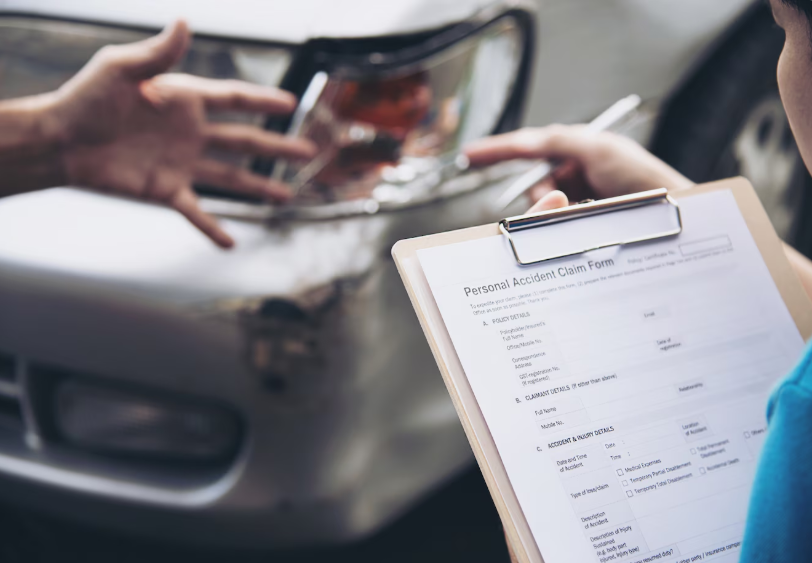
Personal accident cover insures you in the event of any personal injury sustained in an accident, but there are some important restrictions and circumstances to be mindful of.
A few conditions as standard to be aware of are:
The age restrictions on your policy – some companies may not provide cover for the elderly.
You may only be covered for driving in the UK, and not in other countries.
Many standard policies will only cover up to £10,000 for serious injuries or death. If you want greater cover, then you should ensure this is a priority when comparing car insurance quotes.
It’s essential to review the details of your cover to understand if you’ll be eligible for greater payouts, especially if you are hospitalized for treatment after an accident.
Yes, quite possibly - be sure to read the fine print, as there are certainly a few general conditions. Your personal injury cover will become invalid if you're driving under the influence of drugs or alcohol, or if you don't wear a seatbelt. This is no surprise and is like any other insurance policy.
Likewise, you won't be able to claim if you're driving without a valid licence. We don't just mean expiration or vehicle type, but also your address. This one's more of a warning to Generation Rent, who may be moving frequently – your licence becomes invalid if it doesn't match what's on your policy, and you must always tell your provider of any changes. You also won't be covered if you're taking part in extreme sports such as race-car driving or rally-driving.
Lastly, you'll also invalidate your cover if you intend to cause an accident or inflict harm on yourself or another person: intentionally self-inflicted injuries will not be covered. Make sure you update your details with your insurer if you move or change jobs. Otherwise, you could be in breach of your policy, particularly if your employer requires proof of coverage.
Costs vary based on a number of factors, from the length of your policy, your medical history and age, and any previous claims you have made. It's always a good idea to scour the market to get a good idea of what kinds of plans are available that suit your needs, giving you the level of cover you feel comfortable with.
For example, if your injury prevents you from working for an extended period, having access to income protection can be invaluable in providing financial security. This protection is crucial for anyone whose livelihood depends on their ability to work.
If you are self-employed or operate a small business, personal accident insurance is particularly beneficial. It provides a financial safety net if you are unable to work due to a serious injury, ensuring that you can still meet business expenses or personal costs. It's an important form of income protection for those whose livelihoods depend on their ability to work.
For self-employed individuals, this cover is crucial, as it can protect your business from the financial strain of prolonged absences caused by injury.
If you suffer from an injury in an accident, your claim will typically be processed through the insurer of the party at fault. Compensation payments can be made in the form of a lump sum or regular installments, depending on the severity of the injury. Accidental death insurance can provide a one-off payout to your family or dependents, helping them cope with the loss and any business expenses.
Ultimately, whether or not you should add personal accident cover to your car insurance depends on your personal circumstances. If you drive regularly or are concerned about the financial impact of an accident, personal accident insurance can offer peace of mind and valuable financial help in case the worst happens. It’s worth considering how much you’re willing to pay in additional premiums for extra protection, and whether the benefits outweigh the cost.
In most UK car insurance policies, personal accident cover only applies to the policyholder or named drivers, not passengers. Some insurers may offer optional passenger accident cover, so check your policy documents if you want protection for anyone traveling with you.
No, personal accident cover is usually included in fully comprehensive policies. Third-party or third-party fire & theft policies often do not include this cover by default, though it may be added as an optional extra.
Standard UK car insurance personal accident cover typically applies only within the UK. If you plan to drive abroad, check your policy carefully—some insurers offer temporary overseas cover, while others may require a specific extension.
Yes, many insurers allow you to increase your personal accident cover limit as an optional add-on. This can provide a higher lump sum or income support in the event of serious injury or death, giving you extra peace of mind.
Claim processing times vary by insurer, but in the UK, most claims are reviewed within 2–6 weeks once all documentation is provided. Delays can occur if medical evidence or third-party verification is required.
Personal accident cover pays a lump sum or set amount following an accident causing injury or death, while income protection provides ongoing payments to replace lost earnings over a longer period. Both can complement each other, especially for self-employed drivers.